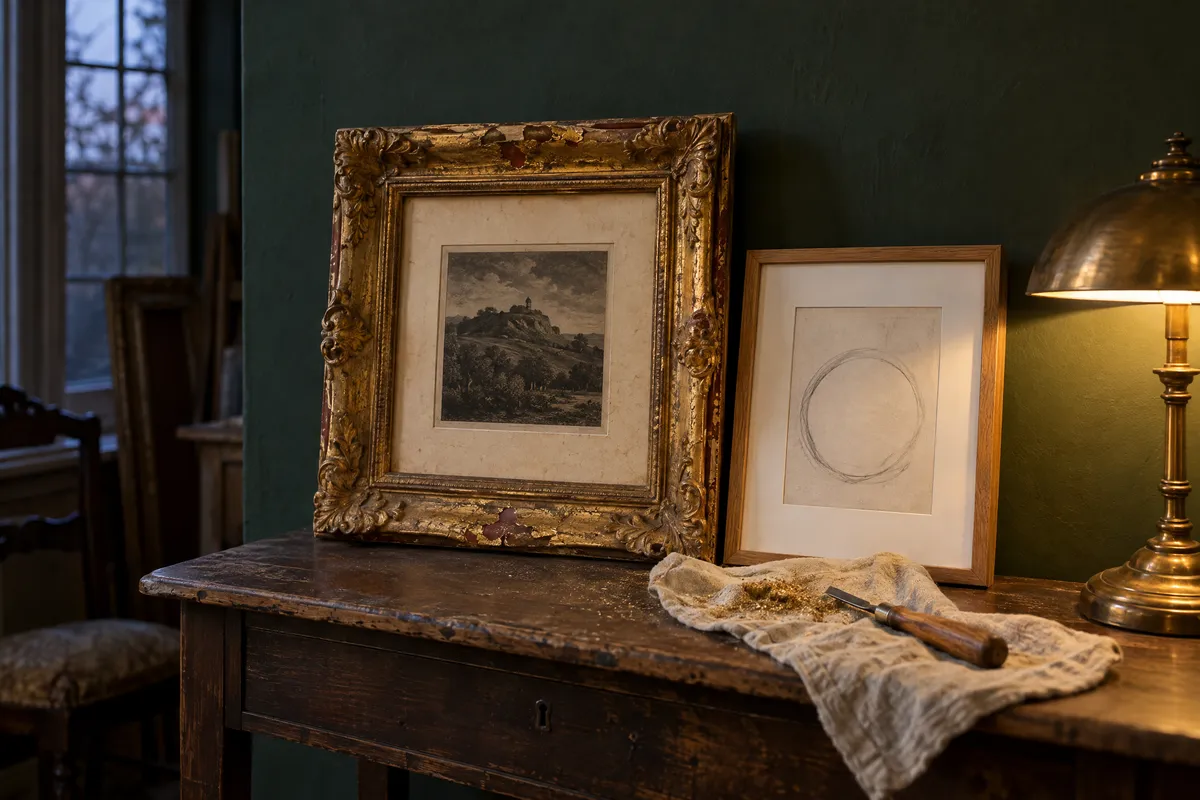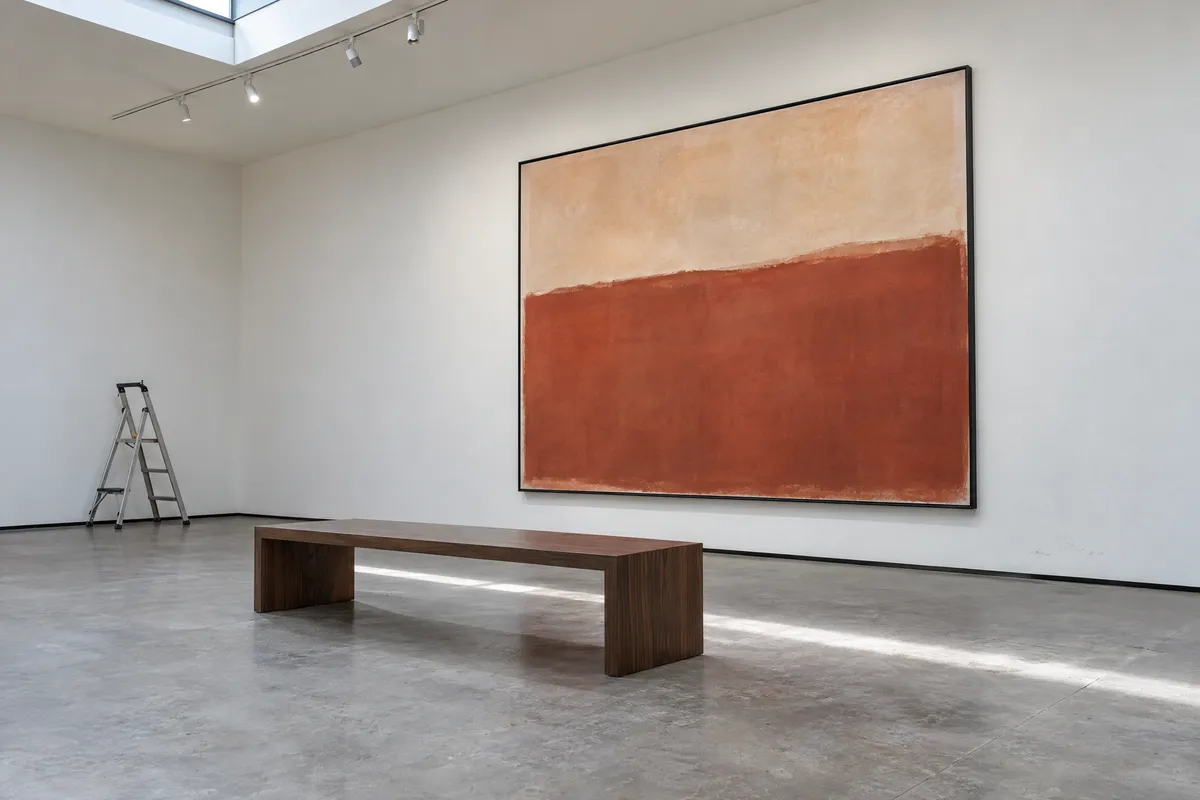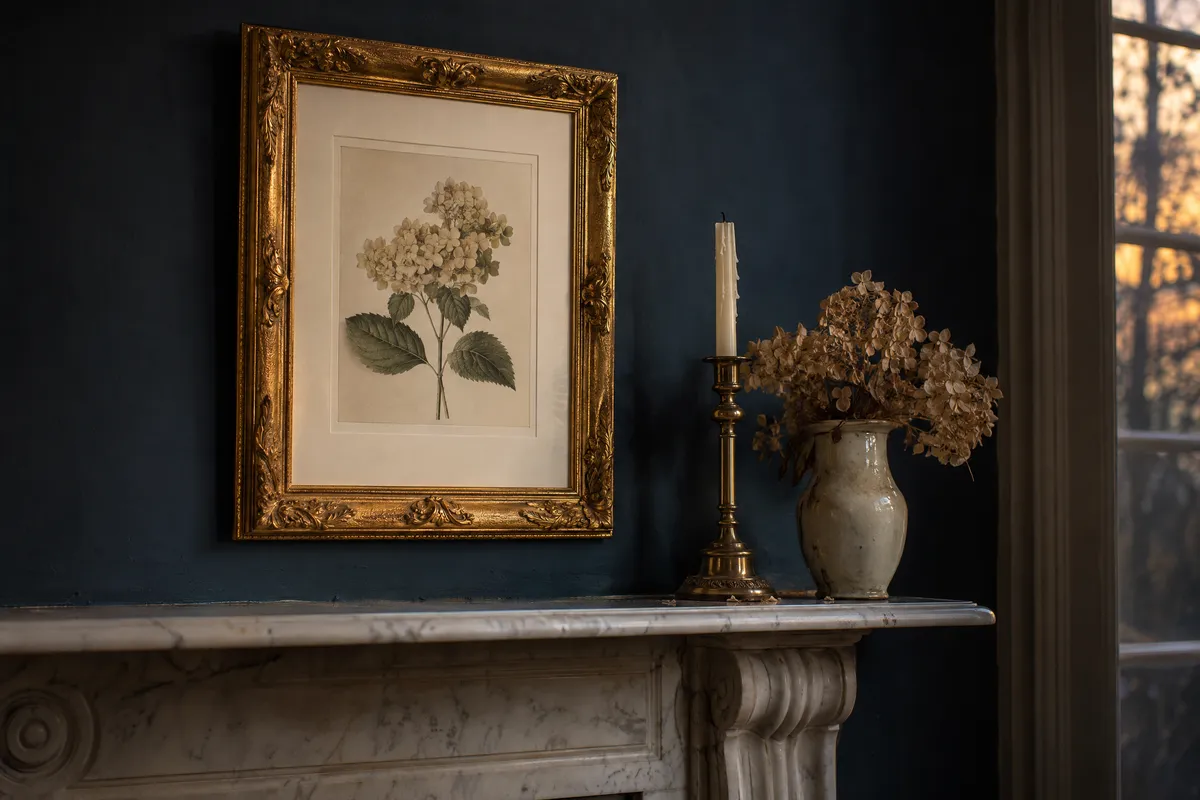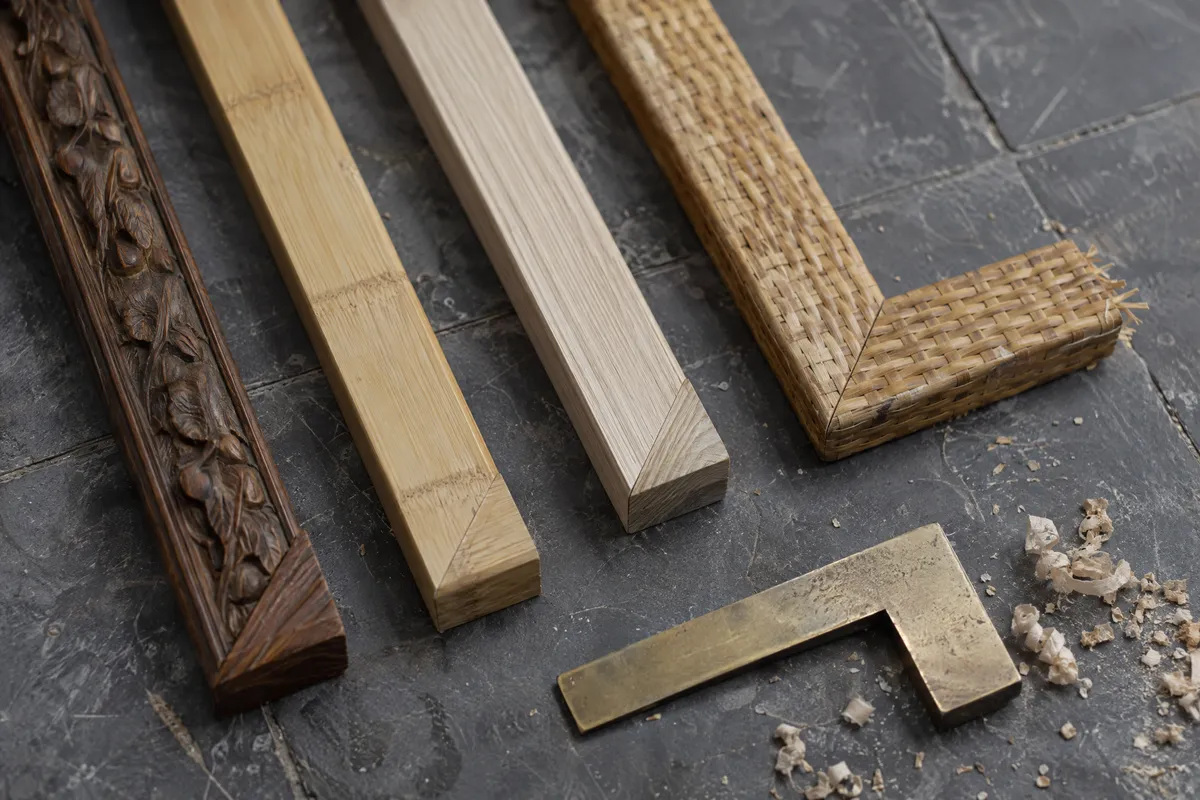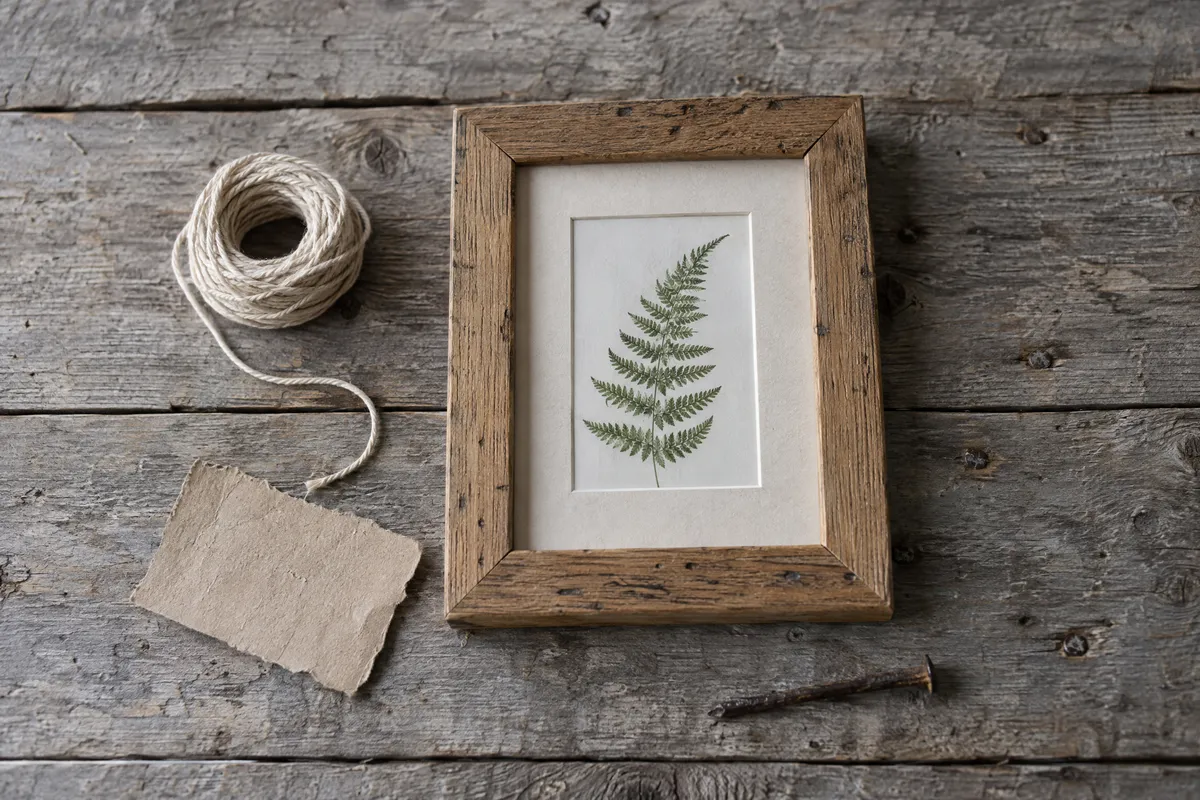
Frames bought on a guess end up returned or in a cupboard. Comparing frames on a photo of your work first means you order the one you chose.
Where framing goes wrong
Most artists know the moment: the frame looked right in the shop or on the product page, and on the painting it does not. The moulding is too wide for a small work, the gold fights the palette, or the mat swallows the image. Then the frame goes back in the box, gets shipped back, or waits in a cupboard for a painting it might suit.
Custom framing makes the mistake expensive. A frame cut to the size of one work rarely fits another, and the cost of a made-to-measure frame quickly reaches the price of a small painting (see the cost overview from CustomPictureFrames.com in the sources).
What a preview can tell you
A framed preview on a photo of the work answers the questions that cause most returns:
- Proportion: how wide the moulding should be for the size of the work, and whether a mat helps.
- Colour: whether a warm wood, a black profile or a gold ornament supports the palette or competes with it.
- Setting: how the framed work reads on a wall, next to furniture, at the size it will really hang.
What it cannot tell you: the exact surface of the wood, the reflection of glass, or how a colour looks under your own light. Screens differ, so treat the preview as a way to narrow the choice, and check the final finish on a sample or in the shop.
Advertisement
Preview first, order once
- Photograph the work flat and in even light. A straight photo keeps the proportions true in the preview.
- Compare two or three frames side by side. In the picture frame generator you can switch frames and mats on the same photo in seconds. AR apps such as ArtPlacer show the work on your real wall instead.
- Check it in a room. Put the framed work on a wall photo at its real size before you decide.
- Order the frame you chose. One order instead of several to compare means nothing to send back.
If the work is only shown online, in a shop listing or a portfolio, a framed image may be all you need: no physical frame at all.
When you buy the physical frame
If the material matters to you, ask the framer concrete questions instead of relying on labels: where the wood comes from and whether it carries a certification such as FSC, whether the moulding is reclaimed timber, and what the glazing is made of. A specific answer tells you more than a general promise.
Conclusion
Trial and error with physical frames costs money, packaging and time. Comparing frames on a photo of the work first turns several orders into one, and sometimes into none.